Under 3 months
38°C+
Urgent clinical advice
NICE places babies under 3 months with this temperature in a high-risk group for serious illness.
Contact NHS 111 urgently or seek an urgent medical assessment.

Evidence-led UK guidance
The number matters — but the child matters more.
A normal temperature varies slightly from child to child. The right response depends on age and how the child looks, breathes, responds, drinks and passes urine — not just the thermometer reading.
38°Cor above is a fever
Step 1
Age changes how a temperature reading should be treated.
Under 3 months
38°C+
NICE places babies under 3 months with this temperature in a high-risk group for serious illness.
Contact NHS 111 urgently or seek an urgent medical assessment.
3 to 6 months
39°C+
NICE places children in this age group in at least an intermediate-risk group at this temperature.
Contact NHS 111 or seek an urgent medical assessment.
Older than 6 months
Look beyond the number
NICE advises against using the height of temperature alone to identify serious illness in this age group.
Act on the child’s condition and warning signs.
39°C or 39.1°C does not automatically mean hospitalisation for every child. Age, symptoms and overall condition guide the response.
Step 2
A thermometer gives one piece of information. These six checks build the fuller picture.
Are they responding normally, waking easily and interested in you or their usual activities?
Are their skin, lips and tongue their usual colour? Look for blue, grey, unusually pale or blotchy changes.
Is breathing comfortable, or is it fast, noisy, grunting or visibly hard work?
Are they breastfeeding or taking fluids? Are they refusing feeds or unable to drink?
Are nappies less wet? Look for reduced urine, dry lips or mouth, sunken eyes or no tears.
Is there a new rash? Does it fade under pressure? Has the fever lasted five days or more?
Trust your concern. Seek advice if the child is getting worse, seems significantly different from usual, or something simply does not feel right.
Step 3
Do not wait for the temperature to rise further when warning signs are present.
Urgent advice
Emergency help
If you think a child is seriously ill, trust that concern and get emergency help.
Practical guidance
Use a digital thermometer. For children under 5, NHS advice is to place it in the armpit and follow the manufacturer’s instructions.
A bath, heavy wrapping, a warm room or recent activity can temporarily alter the reading. Wait a few minutes without allowing the child to become cold or shivery, then recheck.
Forehead strip thermometers measure skin temperature and are not considered accurate for this purpose.
If caring at home
Consider either medicine only if the child is distressed or uncomfortable, following the label and age/weight restrictions. Ask a pharmacist, NHS 111 or a clinician if unsure. Do not give aspirin under 16, and do not alternate paracetamol and ibuprofen unless a doctor or nurse advises it.
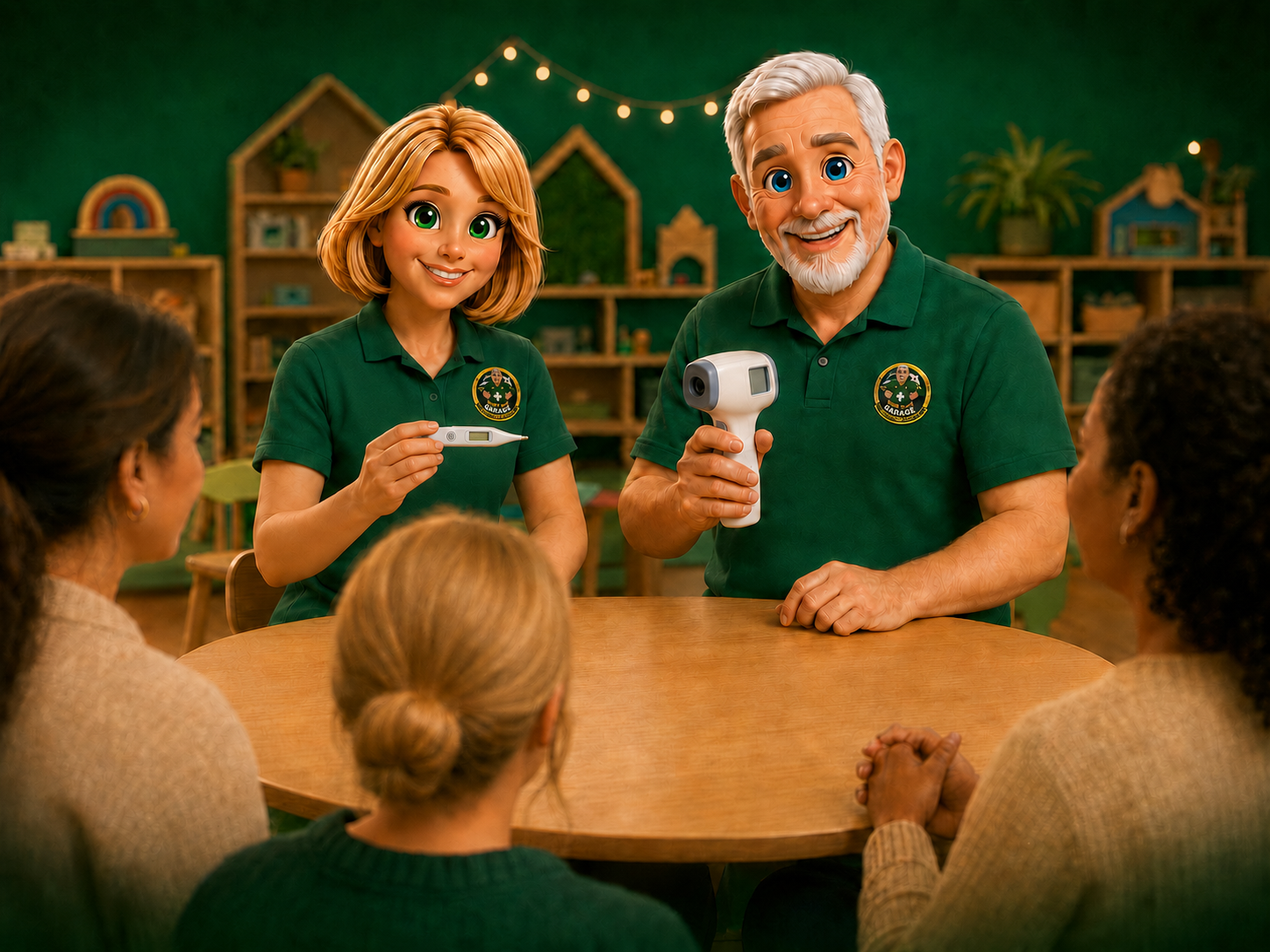
Common in nurseries and schools
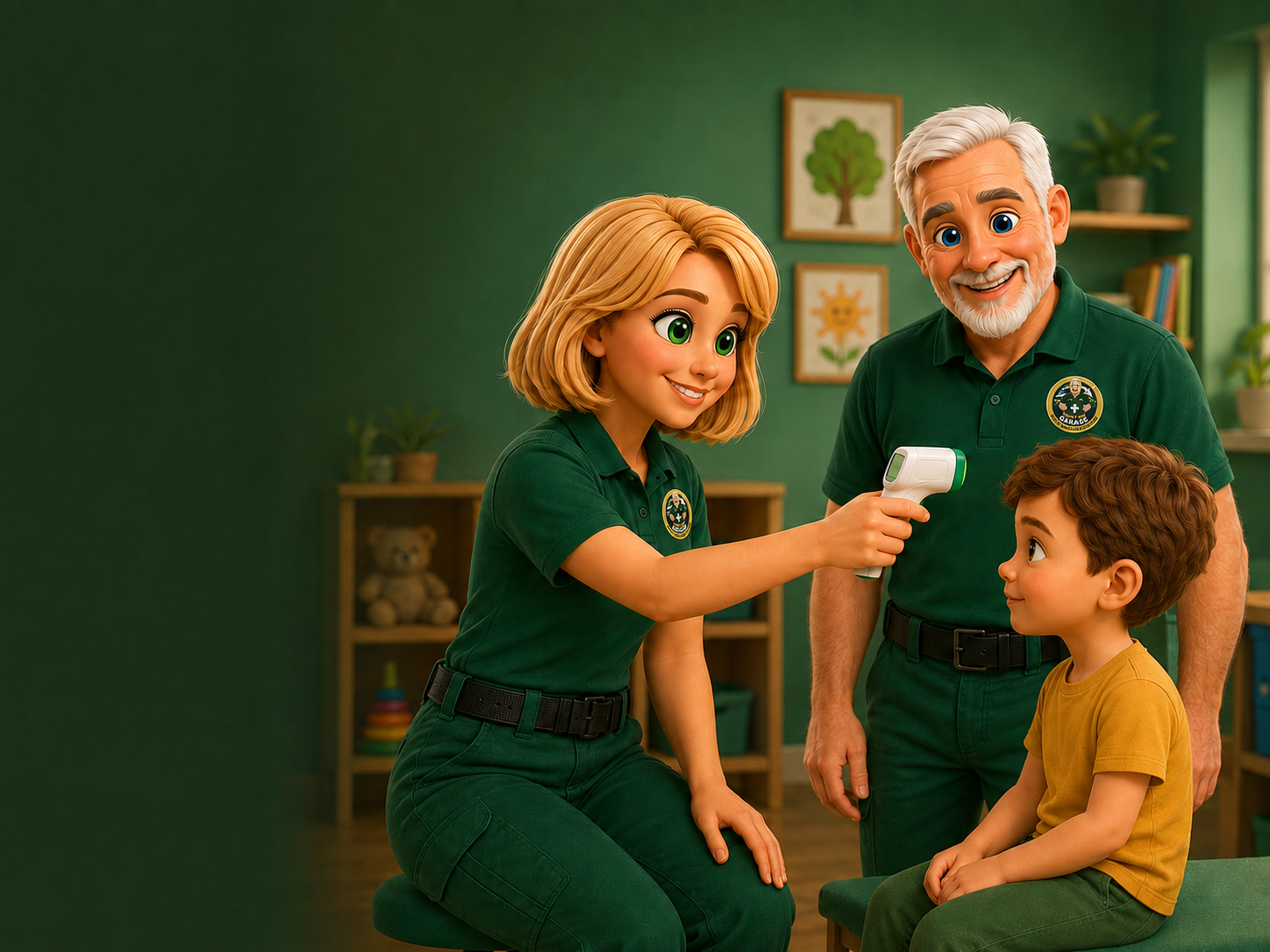
Forehead thermometers are quick and convenient, but the technique depends on the exact type of device.
01
Keep the child still. Make sure the forehead is clean, dry and uncovered. Hold the sensor perpendicular to the forehead at the distance stated in the manufacturer’s instructions.
Do not sweep it across the forehead unless the instructions for that exact device specifically tell you to do so.
02
Some purpose-designed scanners are placed flat against the centre of the forehead and moved horizontally towards either hairline while the scan button is held.
This is a model-specific contact technique. There is no evidence-based reason to prefer the child’s left side.
Checked against UK primary guidance